

Undertaking a Placement
During the placement, my role primarily involved shadowing and providing assistance to the band as needed. While Michael handled the majority of the tasks, he occasionally delegated certain duties to me. For instance, during some pre-production work, I helped to tune a few guitars, changed strings and fixed the intonation, ensuring the instruments were ready for performance. Additionally, Michael asked me to edit some backing tracks to keep as a backup, and to take notes of song changes and ideas while the band was practicing.
Unfortunately, I wasn’t able to attend the studio recording sessions of their latest single which will be released in May 2024 due my aforementioned family issues. However, I made the most of my time in Michael’s studio during rehearsals, and observing how he manages his workload and handles the bookings of his gigs. I witnessed Michael dedicating one or two hours each day to go through emails and check social networks for potential gigs and festival applications. It was fascinating to see how he simply utilized the online platforms available to all of us to secure live performances for the band. What interested me the most, was the use of informal language in his e-mails, which is something I often do not use when I manage the bookings for my own project. We argued that this could be a “UK way” to engage with promoters and venues, which was, indeed, all new to me.
In addition to managing bookings himself, Michael also works with an independent booking promoter for small tours in England, whose name I will prefer not to disclose. This partnership allows Michael to focus more on his music while the promoter handles most of the logistics of the tour arrangements. Through observing Michael’s interactions with the promoter, I gained insight into the professional relationships involved in the music industry.
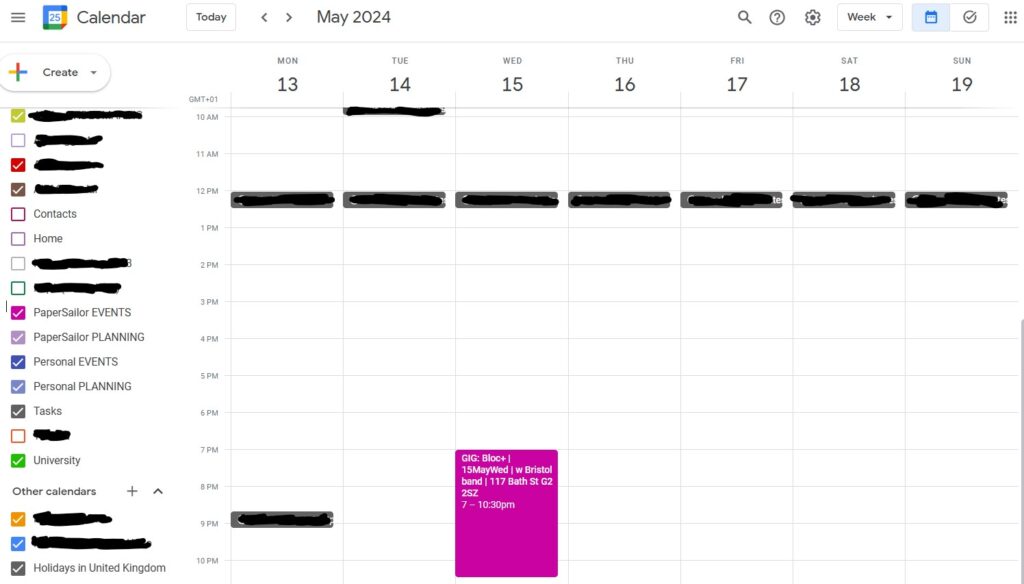
One of my key responsibilities was to keep track of the band’s calendar and upcoming commitments. The band may be local and independent, but it is still busy and, depending on the period, full of scheduled tasks and events. In the beginning, I was simply taking notes on a Word file, while eventually, the band and I created a Google shared calendar. That way, we all had a synchronised version of the calendar that would show events on our phones as well as on our laptops, while sending us notifications of important events, too. We further tinkered with the system, by creating two calendars, one for “planning” (rehearsal, brain-storming, catch-ups) and one for “events” (gigs, studio sessions, music-video shootings).
On the technical side, the band used a self-managed wireless In-Ear Monitoring system. This offered me the opportunity to learn a little about the laws in the UK when it comes to frequencies, and also deep diving into their Behringer X-Air digital mixer software.
Furthermore, as the band uses backing tracks, I was in charge of editing some backup guitar stems that may be layered on top of the other instruments, in the eventuality of the guitarist missing a gig. Michael told me that, initially, he even used to perform solely by himself, while every other instrument would be on a backing track, so he is very confident about this system. In order to execute this task, we initially started sharing files via WeTransfer, and eventually, we set up a Dropbox shared folder, which turned up to be way more convenient. I, also set up a backup local folder on my hard drive, just in case the synchronisation failed.
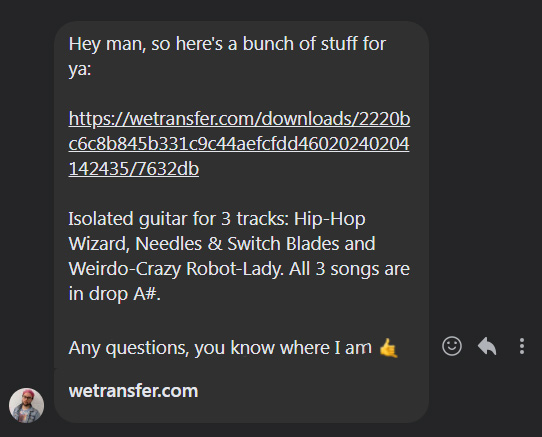
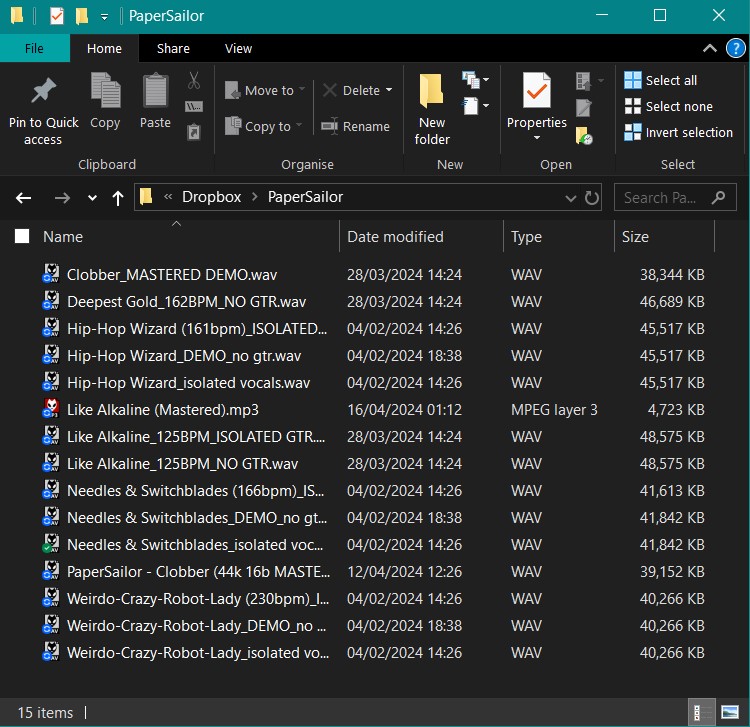
The communication with Michael occurred primarily through Facebook Messenger, where we discussed the upcoming rehearsals/meeting and we discussed about the files to edit.
Overall, my role during the placement was supportive, providing assistance where needed while learning from Michael’s experience as a performing independent artist in a local band. Through our interactions, I gained valuable insights into the music industry and developed practical skills in audio pre-production, organization and networking skills.